Compare 5 Best DMCA Takedown Services for OnlyFans Content
Compare pricing, success-rates & speed of Erasa, Rulta, Enforcity and more to protect leaked OnlyFans content. Free templates & insider tips.

 Fake Account Detection & Removal
 DMCA Takedown Service
 Onlyfans Creator Protection
 Private Photo Protection
 Revenge Porn Removal
 AI Image Abuse Detection
 For Creator
 For Individuals
 General
 Twitter Shadowban Test
 Instagram Shadowban Test
 Tiktok Shadowban Test
 Creator Platform Comparison Tool
 OnlyFans Restricted Words Checker
 OnlyFans Caption Generator
 Blog
Blog DMCA Guides
 Affiliate Program
 Email
Email X(Twitter)
 Telegram
If a photo of you — or something you created — appears on an account you don’t recognize, your first question is simple: where else has this photo gone?
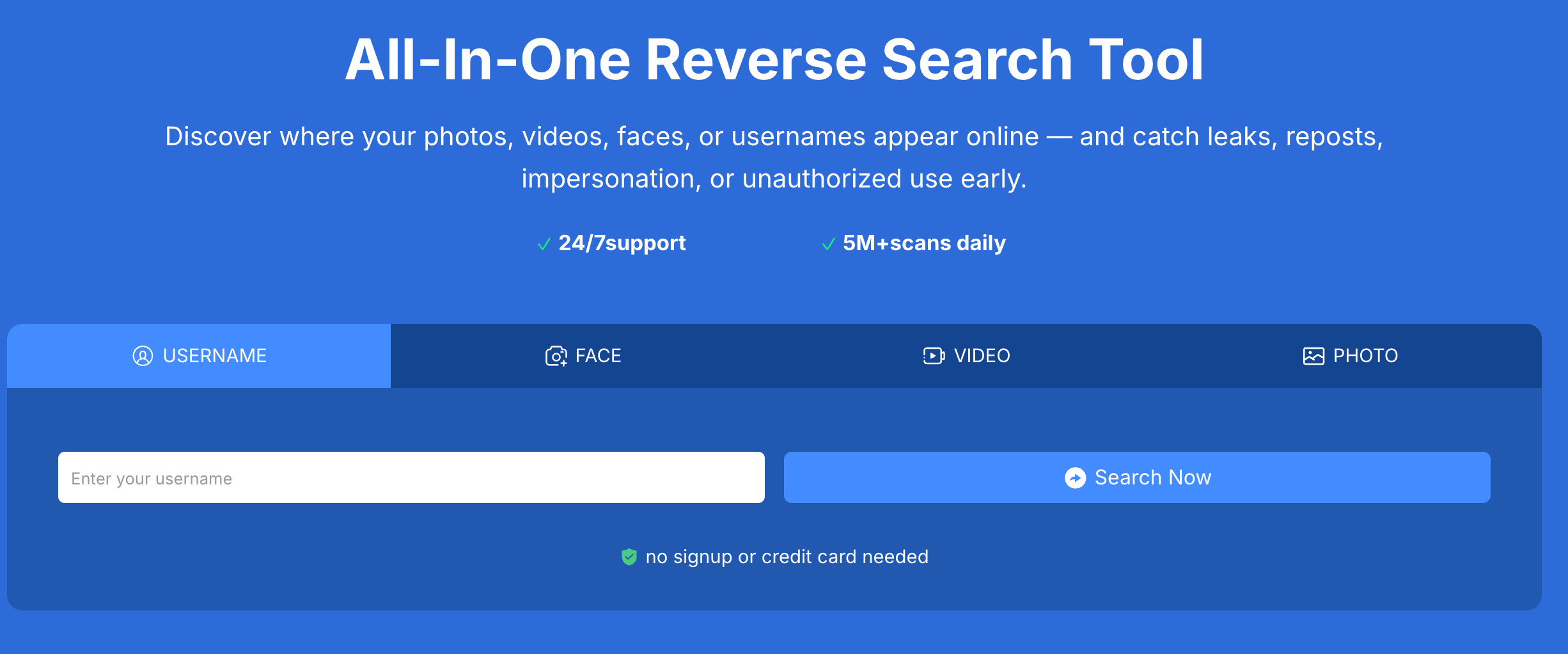
Many people look for a “duplicate image finder” or “duplicate photo finder” when this happens, but what they actually need is a tool built to search the internet, not their phone gallery. Reverse search systems reveal where your photos appear online, even when they’ve been cropped, filtered, or lightly edited. Tools like Erasa are designed for exactly this type of detection.
On the internet, duplicates are rarely perfect copies. People who reuse images usually make small changes:
These are still duplicates — just visually modified ones.
A useful comparison is plagiarism detection.
Plagiarism checkers don’t look for identical wording; they look for recognizable patterns and meaning. Image plagiarism works the same way, which is why modern duplicate picture finder tools rely on visual similarity instead of file matching.
The process is closer to how plagiarism detection software works than to comparing two image files.
An online duplicate image finder typically:
Erasa’s reverse search uses this approach to surface visually similar images and accounts that may be using your photos without permission.
Fake accounts tend to rely on:
These images are easy to repurpose for scams, impersonation, or catfishing.
A reverse search or online duplicate image finder helps you:
This turns suspicion into something verifiable.
Some types of content are copied far more than others:
Common repost locations include:
Reposts often appear as:
Reverse search reveals these duplicates and shows the URLs or accounts where they appear — especially useful for detecting image-based plagiarism or content theft.
Reverse search doesn’t remove content.
It identifies where your photos appear — original, edited, cropped, or reposted versions.
Erasa’s reverse search focuses on detection, showing visually similar images, duplicate usernames, and impersonation patterns.
Removal is handled separately.
Erasa offers a one-stop takedown service that:
In short:reverse search finds the problem; the takedown service resolves it.
Run a reverse search on one of your original images. It will surface visually similar photos across public sites and show where they were posted.
Look for consistent elements: your face, background details, body posture, or editing style. Even modified versions usually preserve recognizable traits.
Light AI edits — filters, enhancements, retouching — are usually detectable. Completely synthetic deepfakes are harder, but partial modifications often match.
Telegram groups, Reddit leaks, adult aggregation sites, and burner accounts on X or Instagram are the most common.
Yes. Just as in text plagiarism detection, altering the format doesn’t change the source. Cropping is one of the most common ways stolen images are reused.
Perform periodic reverse searches on your key photos — especially creator content, selfies, or frequently reused images.
Reverse search gives you visibility into how your photos move across the internet — whether they’ve been edited, reposted, or used in fake accounts.
For people who need both clarity and action, Erasa pairs accurate visual detection with an optional takedown service to remove unauthorized uses of your photos online.
Compare pricing, success-rates & speed of Erasa, Rulta, Enforcity and more to protect leaked OnlyFans content. Free templates & insider tips.
Learn how to protect your adult-oriented content on X (Twitter) with ERASA’s streamlined DMCA tools. Step-by-step guide + free template.
OnlyFans creators use DMCA takedowns to fight leaks — but they don’t always work. This guide explains when DMCA takedowns are effective, where they fail, and how creators handle repeated leaks in practice.
Learn how to remove leaked OnlyFans photos and videos from websites, search results, and social platforms—using proven DMCA takedown steps that actually work.
Worried about catfishing or fake identities in dating apps? Use photo and face search techniques to spot impersonation before it turns into a scam.
Stop image theft now. Use our professional duplicate photo finder to search for duplicate pictures across the web and social media. Detect reuploads and protect your work today.