How to Check Where Your Photos Appear Online (And Spot Misuse)
Photos and account content are copied and reused online more often than most people realize.
Images get lifted from social profiles, dating apps, creator pages, or private posts — then reposted, repackaged, or used to build fake accounts somewhere else.
When you notice something like this — your photo appearing where it shouldn’t, or an image you recognize being used by someone else — the first thing you want to know is simple:how can you check whether your photo or content has been reused, and where it has ended up?
The good news is that this no longer requires guesswork.
There are now fast, practical ways to search for photo reuse, see where an image appears online, and understand how it’s being used.
This article walks through how to check photo reuse using reverse image search, where stolen photos commonly surface, and what steps make sense once misuse is confirmed.
1. Quick Self-Check: What’s Actually Going On With This Photo?
Before running any searches, it helps to pause and identify why the photo raised a red flag.
Different situations point to different types of misuse.
You’re looking at someone else’s profile photo
This is common on dating apps, social platforms, or messaging apps.
The photo might look overly polished, strangely generic, or out of sync with the way the person talks or posts.
What you’re really trying to figure out is whether this image was taken from somewhere else.
You found your own photo on an account you don’t recognize
This usually means impersonation.
Someone may be using your image to create fake profiles, message others, or appear legitimate.
At this point, the concern shifts from is it stolen to how far it’s already spread.
You’re worried about private or sensitive photos
This often starts with a cropped image, a screenshot, or a thumbnail you weren’t expecting to see.
The immediate question is whether the photo has already moved beyond a private space.
You’re dealing with business or brand impersonation
Employee photos, creator images, or brand-facing visuals sometimes get reused in scams.
Here, the priority is to confirm misuse quickly so others don’t get misled.
Once you have a clear sense of which situation you’re in, the next step is to check where the photo actually appears online.
2. How to Check Where a Photo Appears Online
The most direct way to confirm whether a photo is stolen or reused is reverse image search.
Instead of searching about an image, you search with the image itself.
How reverse image search works
You upload the photo you’re concerned about.
The system scans the public web for identical or visually similar images.
This includes versions that have been:
- Cropped
- Resized or compressed
- Screenshot
- Slightly edited or filtered
The goal isn’t to identify a person.
It’s to see where the same image — or the same face — appears elsewhere online.
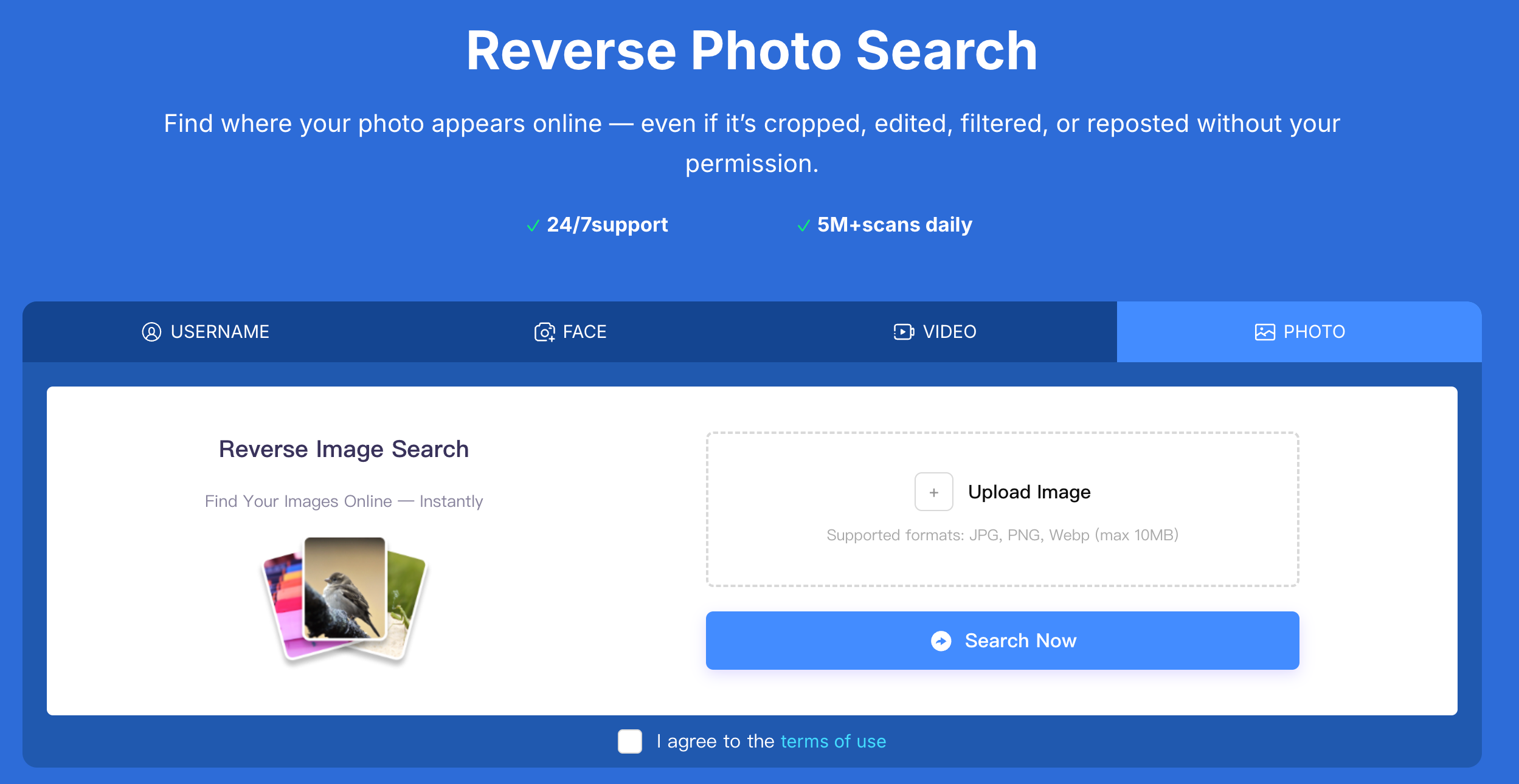
Using Erasa to check photo reuse
With Erasa’s reverse image search, you can:
- See whether the photo appears on other platforms or websites
- Identify cases where the same image is used by different accounts or identities
- Find appearances across social media, forums, impersonation pages, or leak-related spaces
This is especially useful when you’re trying to answer questions like:
- Is this profile photo being reused elsewhere?
- Has my image been taken and posted without permission?
- Is this part of a fake account or impersonation pattern?
What matters here is usage, not identity.
Finding the same photo used in multiple unrelated contexts is often the clearest signal of misuse.

What this method can — and can’t — tell you
Reverse image search can show where a photo appears and how it’s being used.
It cannot confirm who the real person behind the photo is.
That distinction matters, and it’s why this approach stays focused on verification rather than speculation.
3. Three Common Real-Life Scenarios
Most stolen photo cases fall into one of these situations:
- Social or dating profiles using reused photos to build trust
- Impersonation, where someone uses your image to pose as you
- Content misuse, where photos are reposted on forums or unauthorized pages
If your situation looks like one of these, you’re not alone — and the steps that follow apply directly.
4. Where Stolen Photos Usually End Up — and Why
When photos are stolen, they’re rarely taken “just to be taken.”
They’re usually reused for a purpose.
Fake social media and messaging accounts
Stolen photos are commonly used to create believable profiles that message others or run scams.
Dating platforms and romance schemes
High-quality or attractive images are reused to appear trustworthy and appealing.
Forums, repost hubs, and leak sites
Images may be shared without context, consent, or attribution, often spreading further through reuploads.
Commercial or scam-related use
Photos are sometimes used in fake giveaways, investment pitches, or impersonated brand outreach.
Understanding how a photo is being used helps determine how urgent the situation is.
5. What to Do If You Confirm a Photo Is Stolen
Once you’ve confirmed misuse, the next steps are about control and prevention.
Secure evidence first
Save the URLs where the image appears.
Take screenshots showing the account name, profile details, and timestamps.
Avoid contacting the impersonator directly — that often makes situations worse.
Removal and ongoing protection
Stolen photos are rarely a one-time issue.
Once an image circulates, it’s often reused again.
This is where services like Erasa can help by:
- Monitoring for stolen photos, fake accounts, and impersonation
- Identifying new appearances as they happen
- Assisting with removal and takedown requests across platforms
The goal isn’t just removal — it’s reducing repeat misuse.
6. Frequently Asked Questions
How can I tell if a photo is stolen or just reposted?
If the same image is used by different accounts or identities, that’s a strong sign of misuse.
What if I don’t find any results when I search the image?
That doesn’t always mean the photo is safe. It may be newly uploaded, heavily edited, or limited to small platforms.
Can stolen photos be cropped or edited to avoid detection?
Yes. That’s why searching both original and altered versions of an image matters.
Can reverse image search help identify catfish accounts?
It can’t identify a person, but it can reveal whether a photo is reused across unrelated profiles.
What should I save before reporting a stolen photo?
Always save links, screenshots, account details, and dates before taking action.
Can stolen photos be permanently removed from the internet?
Some can be removed, others require ongoing monitoring. Prevention and follow-up matter as much as initial takedowns.
Read More
他の人も楽しんでいます
onlyfansリークのdmca取り下げサービスとは?
最高のdmca削除サービスであなたのonlyfansのコンテンツをリークから保護してください。迅速、信頼性の高い、匿名性の高い、今日あなたの収入を保護します。

onlyfansのためのdmca削除サービスベスト7(2025レビュー)
価格、成功率、erasa、rulta、enforcityなどを比較して、流出したファンコンテンツだけを保護します。無料のテンプレートとインサイダーのヒント。
x (twitter)コンテンツのdmca取り下げを申請する方法:クリエイターズガイド
erasaの合理化されたdmcaツールでx (twitter)上の成人向けコンテンツを保護する方法を学びましょう。ステップバイステップガイド+無料テンプレート。
流出しただけを削除ファンのコンテンツ高速:それを削除するための法的な方法
流出だけファンのコンテンツが拡散?すべてのリークを見つけ、適切なdmca通知を提出し、盗まれた写真や動画が広がる前に素早く削除する方法を正確に学びましょう。
ソーシャルメディアのためのキャットフィッシングファインダー:写真が盗まれているかどうかを確認する方法
ナマズの口座を疑う?ソーシャルメディアのプロフィールで写真が盗まれたり、再利用されたり、誤って表示されたりしていないかどうかを確認する方法については、こちらの記事を参照してください。
ネット上で漏洩した場合の対処法は?
写真、動画、有料コンテンツがオンラインで漏洩した場合、再アップロードを見つけることから継続的な露出を減らすことまで、対処方法を説明します。
誰かが写真をオンラインであなたを脅迫している場合はどうしますか
プライベートな写真で脅迫されることは恐ろしいことです。何をすべきか、自分を守る方法、脅威を報告する方法、画像がオンラインですでに漏洩していないかどうかを確認します。
キャッチコピーは「どのようにして、何をしているのか」
画像リーク検出サービスでは、再投稿、編集、漏洩した写真をオンラインで検出する方法をご紹介します。これらのツールがどのように機能し、いつ使用すべきかを明確かつ実用的に説明します。
あなたの写真が漏洩しているかどうかを知る方法(および確認方法)
写真がオンラインでリークされていないかどうかを確認する方法や、リークされた写真が一般的に使用されている用途については、こちらの記事を参照してください。ないのと説明した。
インターネットから私の情報を削除する方法-実際には何が機能しますか
オンラインで表示される個人的な写真、ユーザー名、または連絡先の詳細?インターネットからあなたの情報を削除し、繰り返される暴露を止める方法を学びます。
誰かがあなたの写真をオンラインで使用していますか?重複バージョンを見つけ
写真が無断で再利用、編集、投稿されていないか確認してください。逆検索は、プラットフォーム間で画像が表示される場所を示します。
逆画像検索ポルノ-あなたの写真が使用されている場所を参照してください
あなたの写真がオンラインで使用されている場所を確認するには、逆画像検索を使用してください。成人およびパブリックプラットフォーム全体でのリーク、誤用、ディープフェイク、不正な投稿を検出します。