Pimeyes face search alternative:Is there a site better than PimEyes?
Looking for a PimEyes face search alternative? This page lists reliable options and explains which tools work better for privacy, social media image checks, and misuse detection.


 Fake Account Detection & Removal
 DMCA Takedown Service
 Onlyfans Creator Protection
 Private Photo Protection
 Revenge Porn Removal
 AI Image Abuse Detection
 For Creator
 For Individuals
 General
 Twitter Shadowban Test
 Instagram Shadowban Test
 Tiktok Shadowban Test
 Creator Platform Comparison Tool
 OnlyFans Restricted Words Checker
 OnlyFans Caption Generator
 Blog
Blog DMCA Guides
 Affiliate Program
 Email
Email X(Twitter)
 Telegram
For creators and brands, a username is not just a handle.
It represents accumulated recognition, trust, search demand, and in many cases, direct revenue.
Once a name gains value, it becomes attractive to others. Similar usernames are created to imitate established identities. Existing names are reused to distribute pirated content, run fake profiles, or redirect traffic. In these cases, the damage is concrete — it affects brand image, audience trust, and monetization.
This is why reverse username search has become an essential tool for creators and brand owners dealing with social media leaks, impersonation, and content misuse.
Instead of manually checking individual platforms, reverse username search allows you to locate accounts that are copying, imitating, or exploiting your username — or close variations of it — across social media and the wider web.
Reverse username search is used to locate accounts that are misusing your username or close variations of it, not to confirm where a legitimate handle exists.
In real investigations, it typically uncovers:
For creators and brands, these results answer a practical question:
Is my username being used by others to impersonate me or profit from my identity?
Reverse username search is rarely run out of curiosity.
It is usually triggered by a clear risk signal.
The most common situations include:
In these cases, reverse username search helps determine whether the issue is isolated, or part of a broader misuse pattern that requires action.
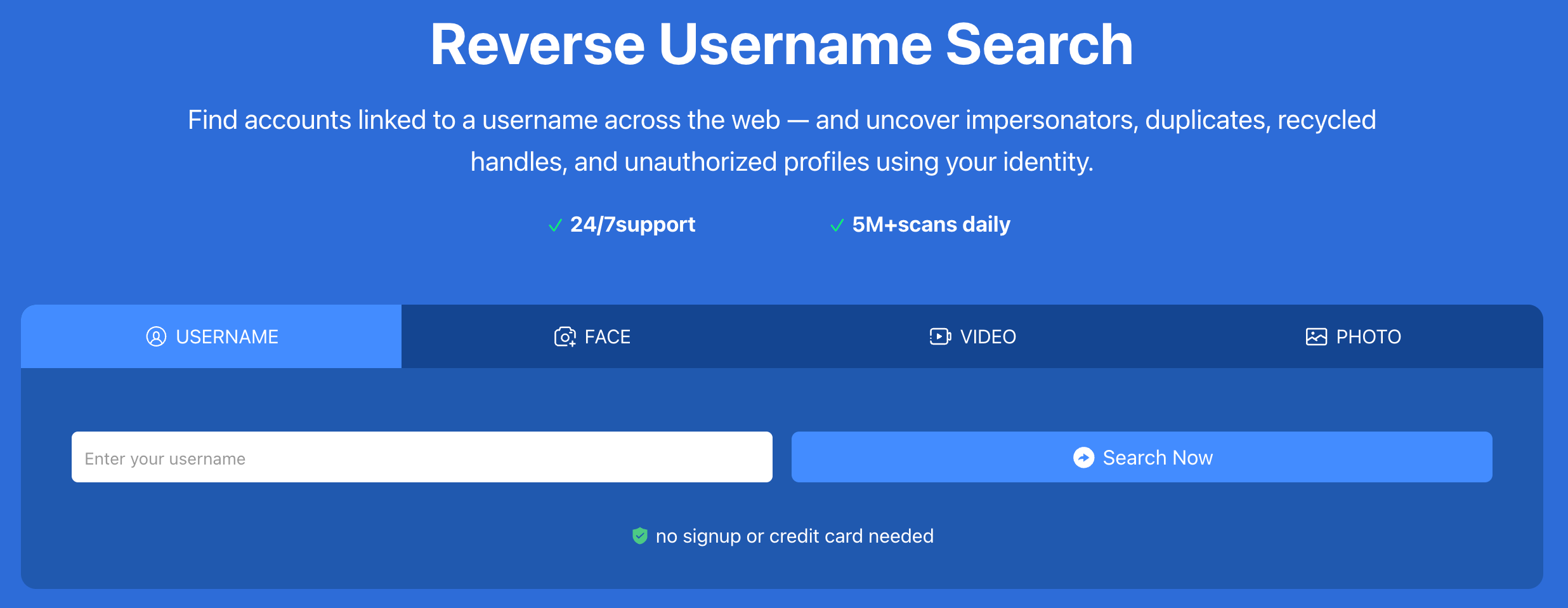
Reverse username search works by identifying patterns of imitation, not just checking availability.
A typical investigation includes:
This process turns scattered findings into a structured view of how misuse is organized.
Reverse username search relies entirely on publicly available information.
Using Erasa as an example, searches do not access private accounts, bypass platform restrictions, or collect sensitive personal data. The system analyzes publicly visible usernames, profiles, and content patterns to identify impersonation or unauthorized reuse.
Results are intended for defensive use — supporting reporting, takedown requests, and brand protection workflows in line with platform policies.
Erasa’s reverse username search is designed to support both detection and response.
It helps creators and brands identify accounts that are impersonating their username, using similar handles to distribute stolen content, or redirecting traffic under a misleading identity. Related accounts are grouped together so patterns of misuse can be verified instead of evaluated one by one.
Once misuse is confirmed, these results can be used for platform reporting and takedown requests, as well as for monitoring new username variations over time to prevent reappearance.
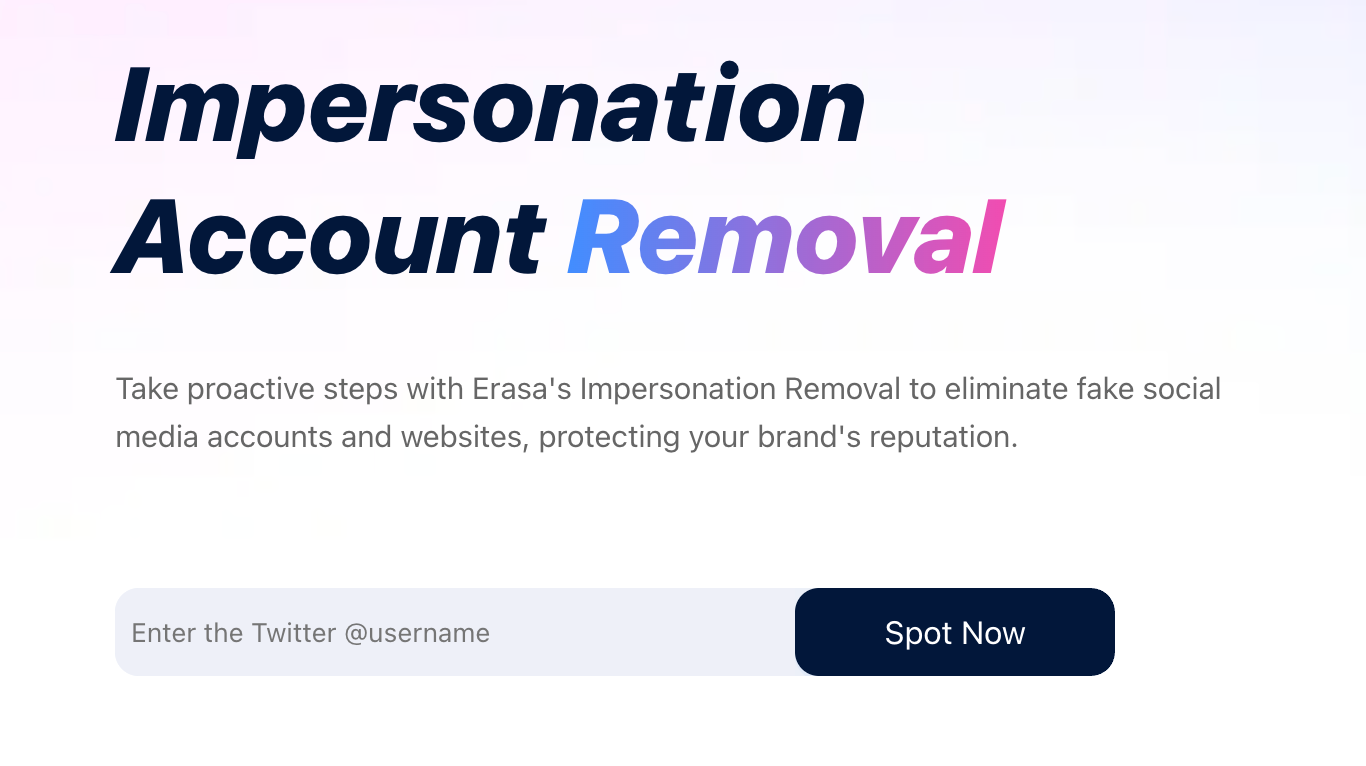
Finding misuse is only the first step.
The outcome depends on what the results show.
Erasa’s reverse username search helps structure this process by turning scattered findings into usable evidence — making it easier to decide when to report, when to escalate, and when continued monitoring is necessary.
This closes the loop between detection, action, and protection.
Reverse username search has clear boundaries.
It does not access private accounts, bypass platform safeguards, or guarantee recovery of deleted content. Results are limited to publicly visible information and patterns that reasonably indicate impersonation or misuse.
Understanding these limits ensures the tool is used for practical enforcement, not assumption.
Reverse username search is designed to identify accounts that are misusing your name or close variations of it.
For creators and brands, this means finding impersonation profiles, distribution accounts hosting stolen content, or users deliberately leveraging a similar username to capture traffic, credibility, or revenue tied to your identity.
By making misuse visible and actionable, reverse username search enables timely reporting, removal, and ongoing protection — preserving the long-term value of a username as a brand asset.
Looking for a PimEyes face search alternative? This page lists reliable options and explains which tools work better for privacy, social media image checks, and misuse detection.
Looking for PimEyes alternatives? Compare safer reverse face search options, understand privacy concerns, and find tools better suited for tracking fake profiles or reused photos.
Learn how to check if your video has been leaked, where stolen videos usually spread, and what to do if your content is reposted without permission.
Reverse image search can’t identify faces. Learn why it fails, how face-search tools work, and how to find where your photos or identity appear online.
Learn why your Twitter (X) reach suddenly dropped. This guide explains the real reasons behind shadowbans and how to confirm your visibility status in minutes.
Learn where to sell feet pics safely, choose secure feet websites, avoid scams, and protect your photos from leaks with smart creator strategies.