Compare 5 Best DMCA Takedown Services for OnlyFans Content
Compare pricing, success-rates & speed of Erasa, Rulta, Enforcity and more to protect leaked OnlyFans content. Free templates & insider tips.

 Fake Account Detection & Removal
 DMCA Takedown Service
 Onlyfans Creator Protection
 Private Photo Protection
 Revenge Porn Removal
 AI Image Abuse Detection
 For Creator
 For Individuals
 General
 Twitter Shadowban Test
 Instagram Shadowban Test
 Tiktok Shadowban Test
 Creator Platform Comparison Tool
 OnlyFans Restricted Words Checker
 OnlyFans Caption Generator
 Blog
Blog DMCA Guides
 Affiliate Program
 Email
Email X(Twitter)
 Telegram
Check if your porn or private photos were leaked — and find out where they’re being reused.
When you start worrying that your porn or private photos might be circulating online, the hardest part isn’t confirmation —it’s not knowing where they ended up, or how far they’ve spread.
Maybe the images were shared with a dating partner.
Maybe you’re a creator and your paid content suddenly feels too familiar to strangers.
Either way, the concern is the same:Are my images already out there — and if so, who’s using them, and where?
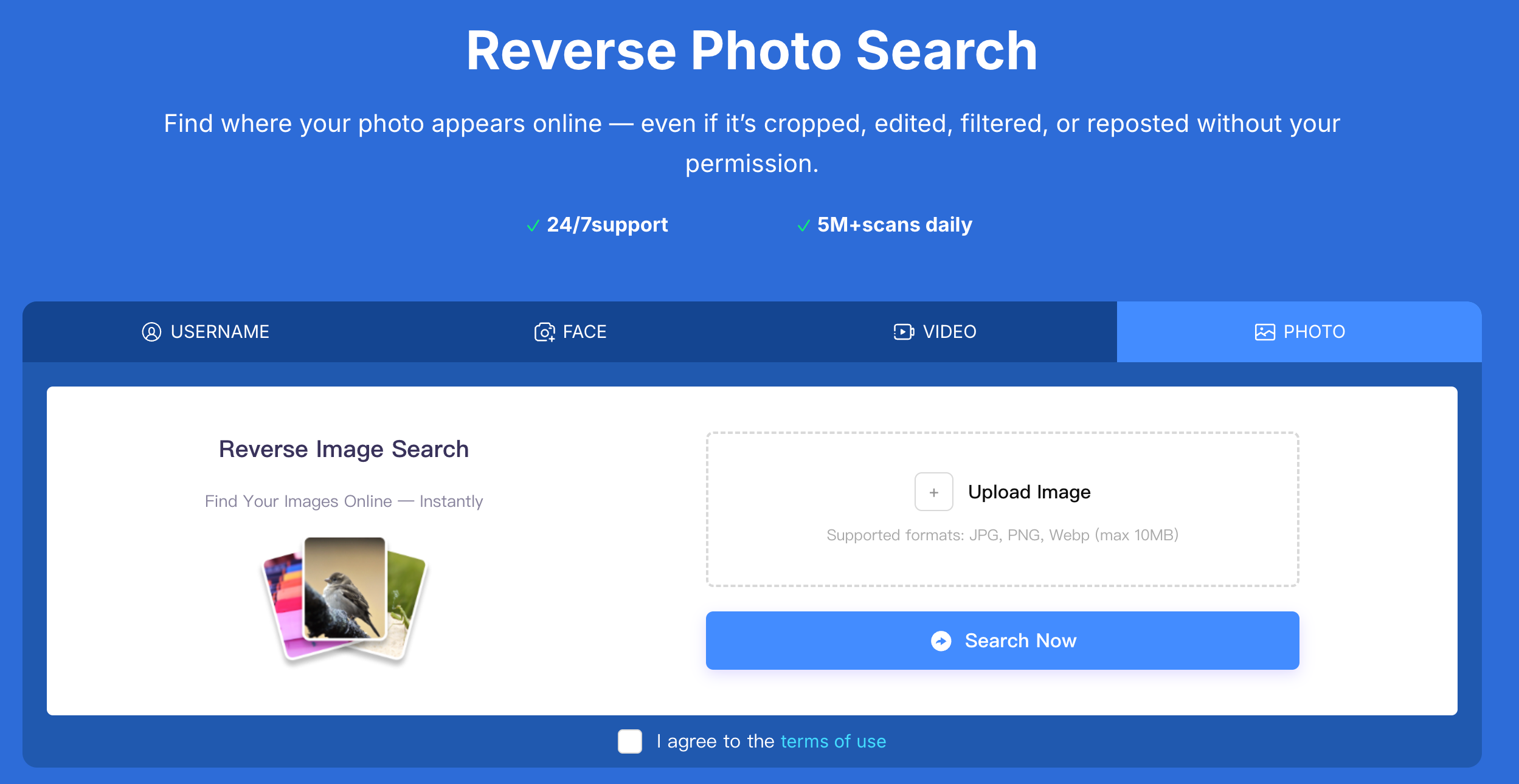
Reverse image search is usually the first step.
But if you want real answers, it has to be done with intent — not guesswork.
✅ Check if your private photos were leaked using reverse image search on Erasa
Most people treat reverse image search as a one-time check:
upload an image, skim a few results, and hope for the best.
That approach almost always misses ongoing misuse.
Leaks don’t stay in one place.
They get reposted, renamed, bundled, sold, and reused under different identities.
That’s why people dealing with real leaks — especially creators — rely on structured reverse search systems like Erasa.
Not to “browse results,” but to track where and how their original content is being used without permission.
The difference is simple:
one approach looks for matches;
the other looks for patterns of misuse.
This is one of the most common triggers.
Photos were shared privately.
They were never meant to be public.
Then something feels off — unfamiliar messages, copied images, or accounts you don’t recognize.
In these cases, leaks are often:
By the time most people check, the image has already moved.
For creators, leaks rarely look like a single stolen post.
Instead, content may be:
The image stays the same — the context changes.
Based on real tracking patterns, leaked images most often appear on:
Many of these places aren’t sites you’d normally visit — which is why leaks often go unnoticed for so long.How Reverse Image Search Should Be Done (If You Actually Want Answers)
Avoid cropped, blurred, or edited versions.
Leaks often involve resizing or watermark removal — the original image gives you the strongest signal.
Different platforms index different parts of the internet.
Finding nothing in one place doesn’t mean the image isn’t circulating elsewhere.
Photos get reused — but so do:
Effective tracking connects these signals instead of treating each image as an isolated case.
Once you spot a match, the most important questions aren’t:
Is it there?
They’re:
Answering those questions is what allows you to protect your content, request removals, and prevent repeat misuse.
This is where reverse search becomes a protection tool — not just a lookup.
If you confirm your porn or private photos are online:
Leaks are rarely one-off events.
They’re processes — and stopping them requires follow-up.
How can I check if my private or porn photos were leaked online?
The most reliable way is to use reverse image search with the original image and check multiple platforms for unauthorized reuse.
Can reverse image search find leaked nude or explicit photos?
Yes. It can detect reposted images on public websites, forums, and accounts, especially when the same photo is reused without permission.
How do I know if someone shared my private photos without consent?
Signs include finding your images under different usernames, on unfamiliar sites, or being contacted by strangers referencing photos you never shared publicly.
Where do leaked porn photos usually get posted?
They are commonly found on porn aggregation sites, impersonation accounts, private forums, and bundled download pages.
What should I do if I find my porn photos on another website?
Document the evidence first, then submit removal or takedown requests. Avoid confronting the uploader directly, as it may cause further spread.
Is reverse image search enough to stop porn leaks permanently?
It’s the first step. Stopping leaks usually requires ongoing monitoring and follow-up to catch reposts and reused content.
Compare pricing, success-rates & speed of Erasa, Rulta, Enforcity and more to protect leaked OnlyFans content. Free templates & insider tips.
Learn how to protect your adult-oriented content on X (Twitter) with ERASA’s streamlined DMCA tools. Step-by-step guide + free template.
OnlyFans creators use DMCA takedowns to fight leaks — but they don’t always work. This guide explains when DMCA takedowns are effective, where they fail, and how creators handle repeated leaks in practice.
Learn how to remove leaked OnlyFans photos and videos from websites, search results, and social platforms—using proven DMCA takedown steps that actually work.
Worried about catfishing or fake identities in dating apps? Use photo and face search techniques to spot impersonation before it turns into a scam.
Stop image theft now. Use our professional duplicate photo finder to search for duplicate pictures across the web and social media. Detect reuploads and protect your work today.